
Foot Supports and Orthotics in Hiking Boots: Balancing Comfort, Stability, and Injury Prevention
Hiking places unique demands on the human foot. Unlike walking on flat, predictable surfaces, trail terrain is uneven, sloped, rocky, and often unpredictable for miles at a stretch, all while the hiker carries additional weight in the form of a pack. Given these demands, the role of foot supports and orthotics inside hiking boots has become an important consideration for both casual walkers and serious backcountry trekkers. Understanding what these devices do, who benefits from them, and how to choose the right option can make the difference between an enjoyable hike and one plagued by pain, blisters, or injury.
What Foot Orthotics Do
Foot orthotics are devices inserted into footwear to support, align, or improve the function of the foot. In the context of hiking boots, they generally fall into two broad categories: over-the-counter (OTC) insoles and custom-molded orthotics prescribed by a podiatrist or orthopedic specialist.
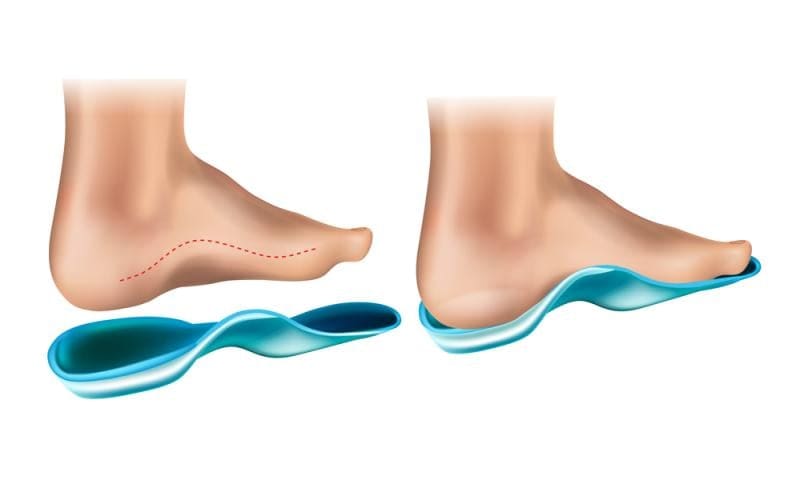
The stock insoles that come with most hiking boots are typically thin, flat pieces of foam designed primarily to fill space rather than provide meaningful support. They offer minimal cushioning and even less structural support for the arch or heel. This is where aftermarket orthotics come in. A well-designed hiking insole typically includes several key structural elements: an arch support to maintain the foot’s natural curvature, a heel cup to stabilize the calcaneus (heel bone) and reduce excessive side-to-side motion, and varying degrees of cushioning to absorb shock from repeated impact on hard trail surfaces.
The biomechanical goal of these supports is to keep the foot in a more neutral, stable position throughout the gait cycle. When a foot overpronates (rolls excessively inward) or supinates (rolls outward), the resulting misalignment can travel up the kinetic chain, contributing to problems not just in the feet but in the ankles, knees, hips, and lower back. Over the course of a multi-hour hike, even small inefficiencies in foot mechanics are magnified by thousands of repetitive steps, making proper alignment increasingly important as distance increases.
Common Foot Problems That Orthotics Address
Several conditions are commonly cited as reasons hikers turn to orthotic support. Plantar fasciitis, an inflammation of the connective tissue running along the bottom of the foot, is one of the most frequent complaints among hikers, particularly those who log significant mileage on hard or rocky terrain. Orthotics with strong arch support can help distribute pressure more evenly and reduce strain on the plantar fascia.
Flat feet (pes planus) and high arches (pes cavus) represent two ends of a structural spectrum, and both can benefit from targeted support, though in different ways. Flat-footed hikers often need firmer arch support to prevent overpronation, while those with high arches may need additional cushioning to compensate for reduced natural shock absorption. Metatarsalgia, characterized by pain in the ball of the foot, is another condition that benefits from orthotics featuring metatarsal pads that redistribute pressure away from sensitive areas.
Blisters, while not a structural foot problem in the same sense, are also closely tied to insole quality. Poor-fitting or unsupportive insoles can allow excessive foot movement inside the boot, increasing friction and the likelihood of hot spots and blisters, especially on long descents where the foot repeatedly slides forward.
Custom vs. Off-the-Shelf Options
For many recreational hikers, quality OTC insoles are sufficient. Reputable brands have engineered insoles specifically designed for hiking, taking into account the need for durability, moisture management, and structural support that holds up over rugged terrain and multi-day trips. These products are widely available, relatively inexpensive compared to custom options, and can be swapped between different pairs of boots.
However, for individuals with more pronounced biomechanical issues, such as significant leg-length discrepancies, severe overpronation, or a history of chronic foot and ankle injuries, custom orthotics may be worth the additional investment. These are typically created from a cast or digital scan of the individual’s foot and are tailored to their specific arch height, pressure points, and gait pattern. While considerably more expensive and requiring a fitting process, custom orthotics can provide a level of precision that generic insoles cannot match, particularly for hikers managing existing musculoskeletal conditions such as arthritis or previous fractures.
Fit Considerations
Adding orthotics to a hiking boot is not simply a matter of dropping in a new insole. Boot fit must be reconsidered as a whole. Thicker or more structured orthotics can change the internal volume of the boot, potentially creating pressure points or reducing toe room that wasn’t an issue with the stock insole. Hikers who add orthotics to existing boots may find they need to go up half a size, adjust lacing techniques, or in some cases purchase new boots altogether to accommodate the added support properly. It is generally recommended that hikers break in any new orthotic and boot combination gradually on shorter walks before committing to a long backcountry trip, since problems with fit often only reveal themselves after extended wear.
Weighing the Benefits Against Practical Realities
It is worth noting that not every hiker needs orthotic intervention. Individuals with naturally well-aligned feet, low mileage goals, and no history of foot pain may do perfectly well with quality stock insoles or minimal upgrades. Orthotics add cost, require an adjustment period, and in the case of custom devices, involve an appointment with a specialist. For some hikers, strengthening the muscles of the foot and ankle through targeted exercises may address minor instability just as effectively as an external support device, and a combination approach, using orthotics while also building intrinsic foot strength, is often the most balanced long-term strategy.
Foot supports and orthotics play a meaningful role in hiking boot performance, particularly for those with existing structural foot issues, chronic pain conditions, or ambitions of covering significant mileage over demanding terrain. By improving alignment, distributing pressure, and absorbing shock, quality orthotics can reduce injury risk and improve overall comfort on the trail. Whether a hiker opts for an off-the-shelf insole or invests in a custom-molded device should depend on individual foot structure, past injury history, and the intensity of their hiking pursuits. As with most gear decisions in the outdoors, the right choice is the one that matches the specific needs of the person wearing it.


