
When Archies Wear Arch Support
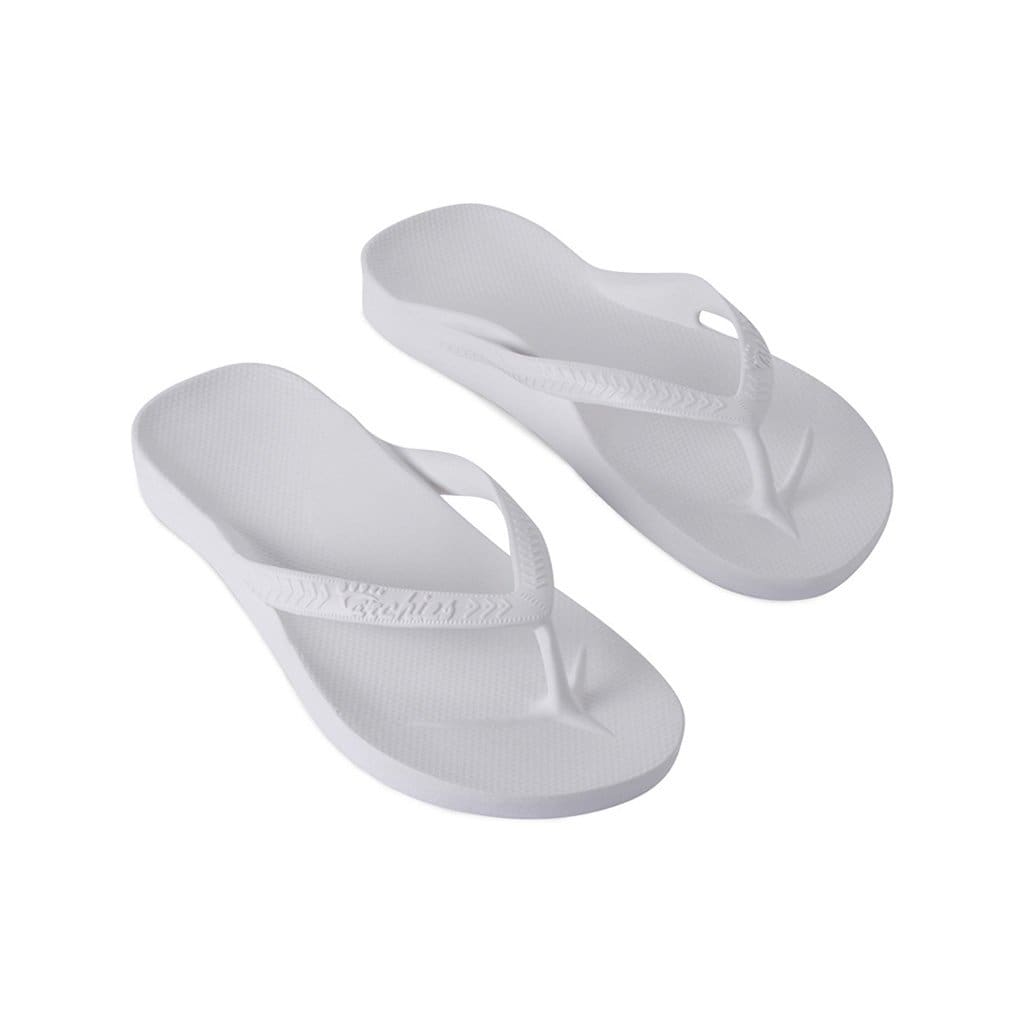
In the vast galaxy of pop culture, the name “The Archies” first conjures a fictional rock band—the bubblegum-pop combo born of 1960s American comics and animation that topped the Billboard charts with “Sugar, Sugar.” Yet in the summer of 2026, a different “Archies” is commanding public attention in an entirely different register. This one is not a group of guitarists, drummers, and vocalists but a brand of arch-supporting flip-flops founded in Melbourne by the physiotherapist Daniel Jones. Priced at roughly £35 to £40, these flat-looking sandals have become summer essentials for the likes of Jennifer Aniston and Katie Holmes, and have triggered a wave of reviews from The Independent to CNN. A curious cultural phenomenon emerges: when a flip-flop designed to correct posture shares a name with a manufactured pop idol, what exactly are we celebrating?
To understand the appeal of Archies flip-flops, one must first examine the “enemy” they were built to fight. The design flaws of the traditional flip-flop are almost structural: a flat sole offers no arch support, while loose straps force the wearer to unconsciously “grip” the sole with their toes. This constant micro-contraction of the foot muscles leads not only to fatigue but can trigger a chain of problems from plantar fasciitis to Achilles tendinitis. Jones’s insight as a physiotherapist was precisely this: his patients needed support but were unwilling to give up the casualness and lightness of flip-flops in summer. The core innovation of Archies, then, is a kind of “addition through subtraction”—preserving the minimalist silhouette of the flip-flop while embedding up to 2.2 centimeters of arch support, a slightly raised heel, and a molded footbed that contours to the sole.
This design philosophy has been borne out in testing. One Independent reviewer, wearing Archies through days of more than ten thousand steps in London and on holiday, described the core shift not as “softer” or “bouncier” but as “no longer needing to grip with the toes.” This mechanical turn from “passive clamping” to “active support” is precisely what distinguishes Archies from ordinary flat sandals. An Elle editor, after logging twenty thousand steps on her first wear, wrote that the most striking sensation was that “the toes could finally relax—and yet the flip-flop didn’t fly off.” These accounts reveal an often-overlooked truth: comfort does not come from extra cushioning but from returning the body to its natural alignment.
Archies, however, is not a universal “one size fits all” solution. CNN’s testing team found that one editor with flat feet actually felt arch ache, speculating that her feet may have needed a higher level of support than a flip-flop can provide. This precisely illustrates that the success of Archies lies not in being a “miracle shoe for everyone” but in serving with precision a group long ignored by mainstream footwear: those who love the convenience and style of summer sandals but who, because of foot structure or past injury, have had to forgo them in pain. For them, Archies solves a real dilemma rather than manufacturing a new consumer desire.
The popularity of these flip-flops also refracts a subtle tension in contemporary wellness-consumer culture. On one hand, their authority derives from the identity label “designed by a physiotherapist” and the functional promise of “preventing foot injury.” On the other, their path to ubiquity follows the logic of a fashion item entirely—celebrity street style, viral social-media spread, and the tag “the pair Jennifer Aniston wears.” Between health and fashion, Archies has found a narrow but effective channel: it looks enough like an ordinary flip-flop not to disrupt the casualness of an outfit, yet is unlike an ordinary flip-flop enough to give the wearer the psychological comfort of “I am taking care of myself.”
It is worth noting that Archies‘ “single-component” design—straps embedded directly into the sole rather than threaded through holes—solves the most infuriating problem of the traditional flip-flop: the blowout. This seemingly minor engineering improvement points, like the arch support, to the same product philosophy: a systematic correction of the flaws that everyday objects have taught us to accept as “just the way things are.” What Jones challenges is a deep-seated assumption—that flip-flops are supposed to be flat, loose, and unhealthy. His answer is: if the structure allows, why can’t something be both a flip-flop and an orthotic?
Of course, Archies is not without compromise. Multiple reviews agree that the straps of a new pair are unusually tight, requiring days or even a week of break-in before reaching ideal comfort. This “deliberate discomfort” may deter some consumers, but it also hints at the physical precondition for effective arch support: only straps that fit closely enough can hold the arch stably over its support rather than sliding out of place during walking. Here, a subtle contract forms between comfort and function—brief constraint in exchange for lasting ease.
Returning to the name coincidence with which we began: the fictional band The Archies defined the sweetness and transience of bubblegum pop with “Sugar, Sugar”; the flip-flop brand Archies challenges the casualness and forgetfulness of flat-shoe culture with arch support. The shared name “Archie” may be mere accident, yet it forms a hidden counterpoint: one about invented pleasure, the other about real support. And the choice consumers are making with their wallets may be telling us that in the summer of 2026, the body’s honest sensation—the feeling of walking all day without a dull ache in the soles—is becoming a new currency of pop culture. A flip-flop cannot sing, but it can let your feet tell you what it means to be “held up” in freedom.


